
The BP Is 200. Everybody Stay Calm.
Hello Team,
A few pearls from last night—mostly about blood pressure. There have been some meaningful updates to how we should think about asymptomatic hypertension in the ED, so here’s the quick version.
1. Elevated BP ≠ hypertensive emergency
The 2024 AHA Scientific Statement on elevated BP in the acute care setting makes an important distinction:
Hypertensive emergency = markedly elevated BP + new/worsening target-organ damage. Think brain, arteries, retina, kidneys, and heart. These patients need prompt, controlled BP reduction, generally with IV antihypertensives.
For asymptomatic elevated BP, first ask why the BP is elevated. Pain, anxiety, acute illness, sleep deprivation, missed home medications, and even the environment of being hospitalized can all raise BP.
The evidence increasingly suggests that acutely treating asymptomatic elevated BP in the hospital should be the exception, not the rule. Observational studies have actually demonstrated potential harm from doing so.
Avoid PRN antihypertensive orders simply to make the number look better.
And perhaps most importantly: we can retire the term “hypertensive urgency.” The AHA has moved away from it in favor of “asymptomatic markedly elevated BP.”
Treat the patient, not the number.
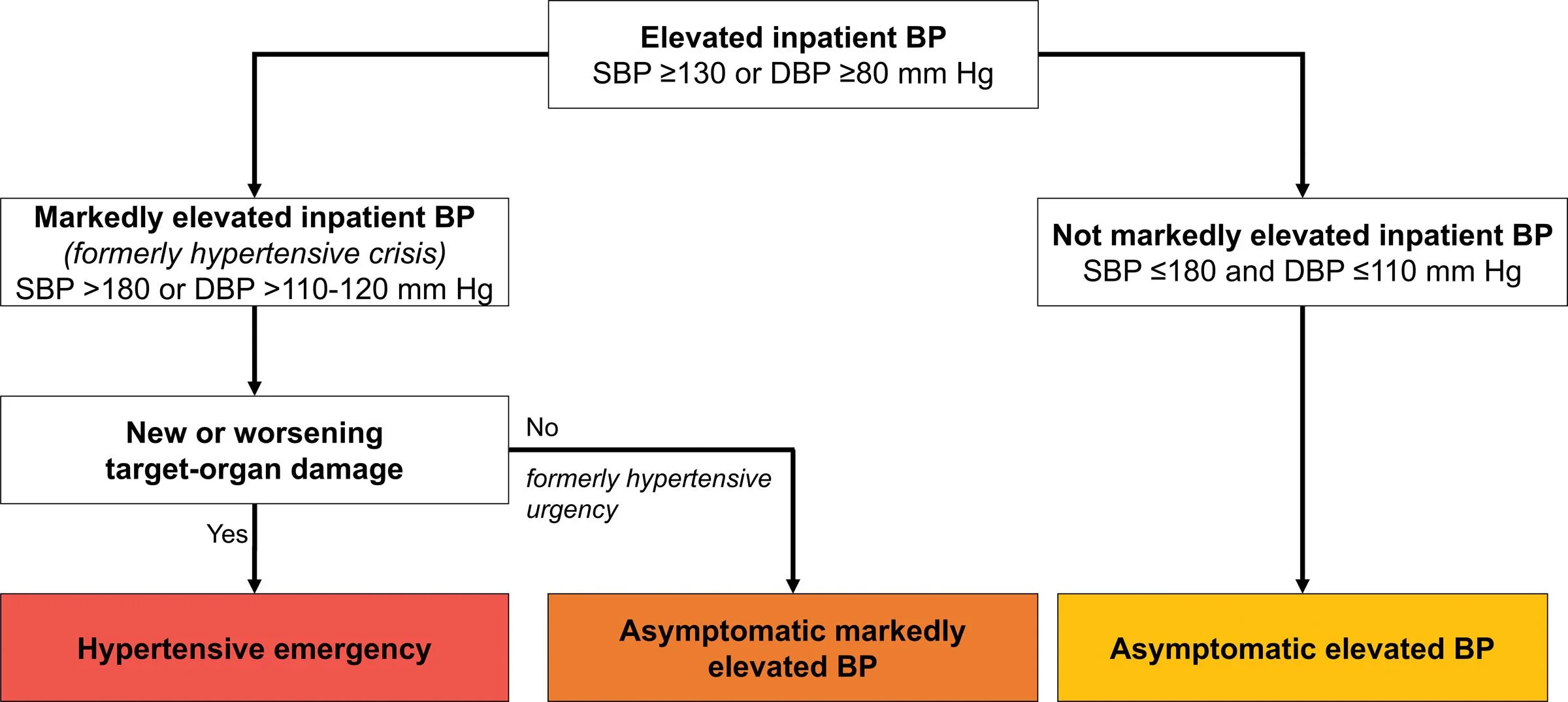
Terminology of elevated inpatient BP in the acute care setting. (From The Management of Elevated Blood Pressure in the Acute Care Setting: A Scientific Statement From the American Heart Association)
2. Hydralazine: maybe we can stop doing this?
Hydralazine remains a floor favorite because it is very good at accomplishing one thing: making a high number become a lower number. Unfortunately, that isn't necessarily what our patient needs.
Hydralazine has unpredictable antihypertensive effects, relatively unfavorable pharmacokinetics, and can cause reflex tachycardia. For a true hypertensive emergency, agents that are easier to titrate and have more predictable effects—such as nicardipine, clevidipine, or labetalol, depending on the clinical situation—are generally preferable.
For the patient who is asymptomatic and going home, think differently: restart their home medications when appropriate or consider initiating oral long-term therapy rather than giving an IV medication to transiently normalize their ED BP.
See this EMdocs review on medications for hypertensive emergency—skip to the bottom for hydralazine if you want.
See this brief clinical commentary on this medication.
3. ACEP: starting outpatient therapy from the ED is reasonable
ACEP updated its clinical policy in 2025 regarding adults being discharged from the ED with asymptomatic elevated BP.
Their Level C recommendation is to consider initiating outpatient antihypertensive medications in patients being discharged from the ED with asymptomatic elevated BP.
In our population—where reliable primary-care follow-up can sometimes be difficult—this may be particularly relevant. We don't necessarily need to fix the BP today, but we may have an opportunity to start treating the patient's chronic hypertension.
4. And now the AHA is pushing combination therapy
The 2025 AHA/ACC hypertension guideline recommends the usual first-line classes: thiazide-type diuretics, long-acting dihydropyridine CCBs, ACE inhibitors, or ARBs.
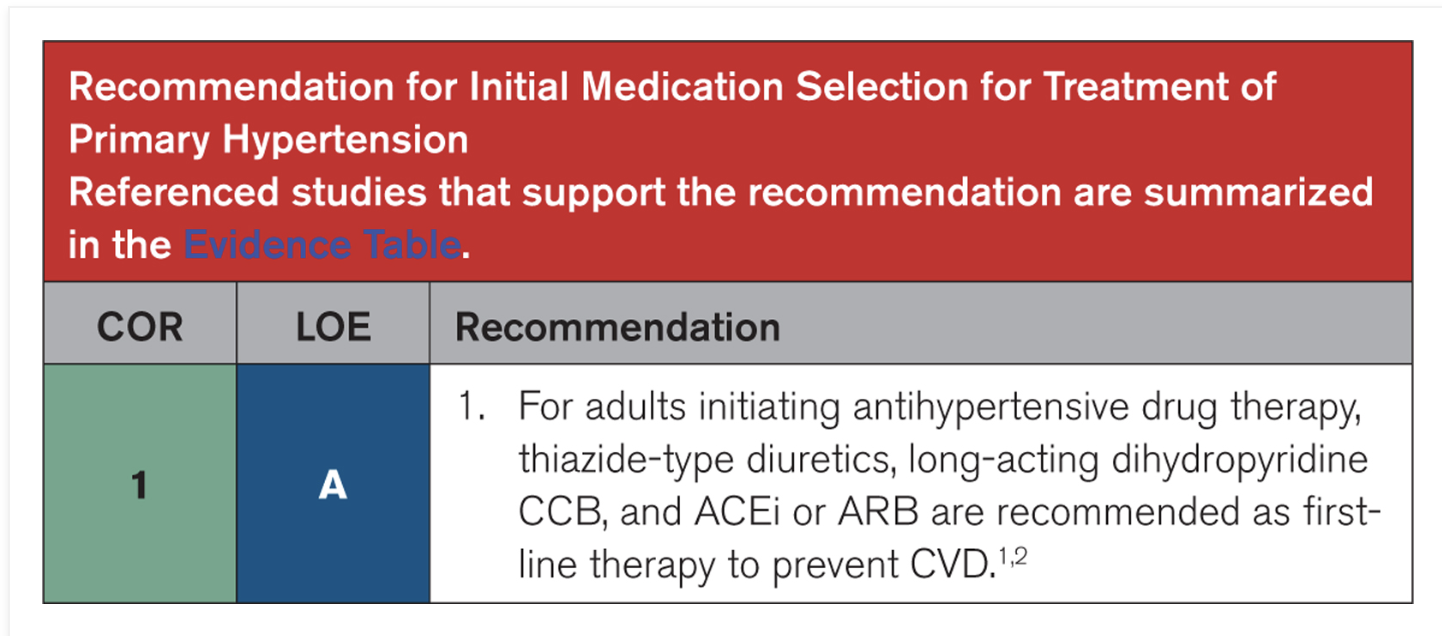
Source: AHA
The bigger change is the recommendation for initial combination therapy in stage 2 hypertension (≥140/90) using two first-line agents from different classes, ideally as a single-pill combination. For stage 1 hypertension, starting with a single agent remains reasonable.
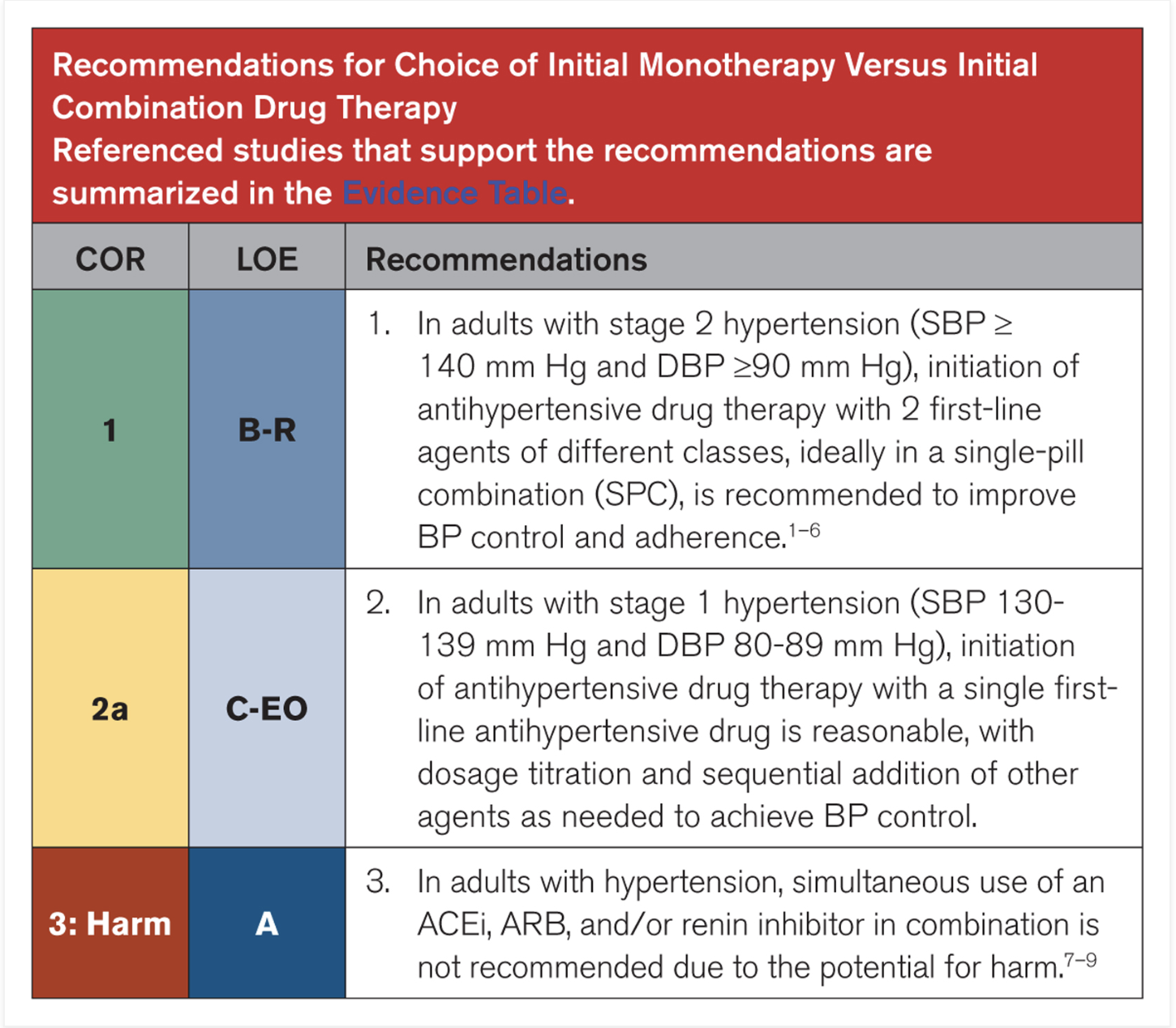
Source: AHA
Realistically, most hypertension that catches our attention in the ED is not 142/91—it is often firmly elevated into the 160s, 170s, or 180s. If the patient has no hypertensive emergency and we're discharging them, it may be reasonable to think beyond giving a one-time medication in the ED and instead consider starting low-dose chronic oral therapy, including combination therapy when appropriate.
5. So what can we actually prescribe from our ED?
This will be dependent on the formulary at your institution and what our patients can consistently afford.
We looked into what is stocked by our outpatient pharmacy and covered by AHCCCS, and we have two particularly practical combination options:
Lisinopril/HCTZ: 10/12.5 mg, 20/12.5 mg, 20/25 mg
Losartan/HCTZ: 50/12.5 mg, 100/12.5 mg, 100/25 mg
These should be among the lowest-cost combination options for our patient population, particularly when patients fill them through our outpatient pharmacy and its 340B pricing program.
Key Take-Aways
Rule out hypertensive emergency
Address reversible causes (e.g. pain)
Don't chase an asymptomatic number with IV/PRN medications
When appropriate, initiate sensible long-term oral BP therapy.
References
Bress AP, Anderson TS, Flack JM, et al. The management of elevated blood pressure in the acute care setting: a scientific statement from the American Heart Association. Hypertension. 2024;81(8):e94-e106. doi:10.1161/HYP.0000000000000238
Miller J, McStay C. Hypertensive crisis: pearls and pitfalls for the ED physician. emDocs. Published February 5, 2018. emDocs review
Swaminathan A. Clinical controversies: hydralazine is broken. No, really. Emergency Medicine News. 2022;44(2):10-11. Hydralazine commentary
Wolf SJ, Lo B, Shih RD, Smith MD, Fesmire FM. Clinical policy: critical issues in the outpatient management of adult patients presenting to the emergency department with asymptomatic elevated blood pressure. Ann Emerg Med. 2025. ACEP summary of the 2025 clinical policy
American Heart Association/American College of Cardiology Joint Committee on Clinical Practice Guidelines. 2025 AHA/ACC guideline for the prevention, detection, evaluation, and management of high blood pressure in adults. Hypertension. 2025. doi:10.1161/HYP.0000000000000249
